My work sits at the intersection of futures studies, learning, systems thinking and societal transformation. Throughout my career, I have been interested in how people, organisations and societies learn, adapt and create futures worth living. Rather than specialising in a single discipline, I have spent much of my career connecting ideas, people and practices across disciplinary, organisational, and institutional boundaries.
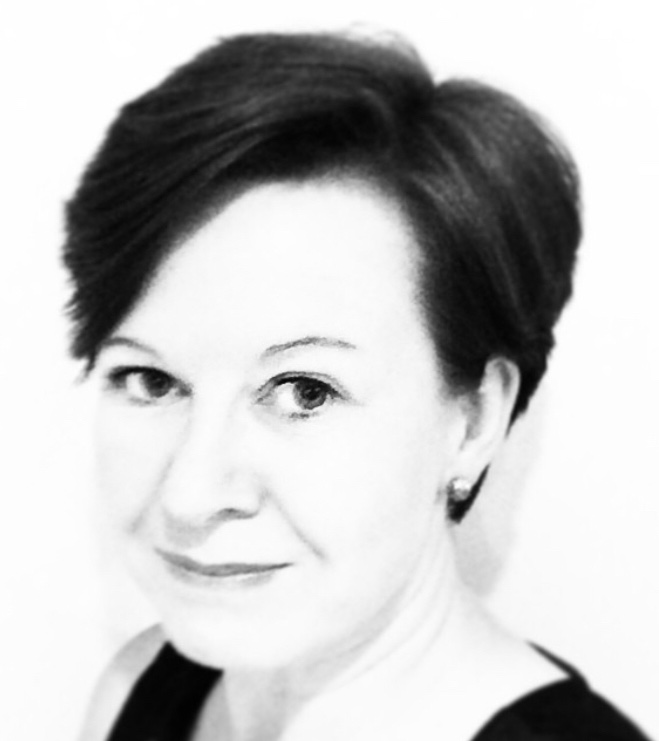
My story
I have never fit comfortably within disciplinary boundaries.
From the beginning of my studies, I was drawn to seemingly distant fields: humanities, arts, business, natural sciences, social sciences and tourism studies. Rather than specialising into any of them in particular, I became interested in the relationships between things: how systems evolve, how knowledge is created, how people learn, and how societies imagine and shape their futures.
Throughout my studies and early professional life, various psychological and career assessments repeatedly highlighted my unusually balanced profile. Rather than showing pronounced strengths in any single domain, my capabilities appeared remarkably even across verbal, analytical, and quantitative thinking. Looking back, this may explain why I have always been drawn to connecting ideas across disciplines and seeing patterns across seemingly unrelated fields. I have always felt more like a systems thinker and integrator than a specialist. I still do.
My academic journey has not followed a straight path. I began thinking about a doctoral dissertation while expecting my first child, but it took another fifteen years before I decided to pursue it seriously. By then, I was not seeking an academic career. Rather, I was looking for a way to challenge myself, make fuller use of my strengths and curiosity, and explore questions that genuinely fascinated me. Completed alongside full-time work in 2019, my dissertation explored value co-creation in innovation ecosystems.
During the final stages of my doctoral studies, I encountered Futures Studies. It felt like coming home. I was particularly inspired by Causal Layered Analysis (CLA), created by Sohail Inayatullah in the late 90’s – not merely as a method but as an invitation to question assumptions, challenge dominant narratives and explore alternative futures. The approach was still rarely used in Finland at the time and often considered too complex for organisational foresight. Yet, together with living systems thinking, the work of Fritjof Capra, and the concept of autopoiesis developed by Humberto Maturana and Francisco Varela, referring to the capacity of living systems to continuously self-produce and maintain their organisation, it opened up a way of understanding the deeper connections between learning, transformation, and the future.
These interests gradually led me towards questions that continue to guide my work today: Having spent much of my career in higher education and learning environments, I became increasingly interested in how people, organisations and societies develop their relationship with the future, and how futures consciousness, futures literacy and anticipatory capacities can be strengthened.
Over time, my work has expanded beyond questions of capability development alone. I have become increasingly interested in challenging technocratic approaches to the future, questioning narratives of inevitability and the lack of alternatives that often shape policy and decision-making, and exploring how ethical reflection, responsibility and long-term thinking can become a more integral part of how we anticipate and shape change.
All the above has shaped my work in Futures Literacy, futures capacity building, international collaboration and the development of FLARE, a European COST Action dedicated to advancing Futures Literacy across Europe. It has also led me to question some of the assumptions embedded within futures studies itself, including its methods, dominant perspectives and underlying conceptions of knowledge, agency and transformation.
What I have learned
- Meaningful change calls for collectives. The most significant transformations rarely emerge from individual expertise alone. They grow through trust, dialogue and the willingness of people from different backgrounds to work towards a shared purpose. Building FLARE reinforced my belief that networks and communities are among the most powerful forces for creating change.
- There are always alternatives. Over the years, I have become increasingly interested in questioning narratives of inevitability and the assumption that current trajectories are fixed. Many societal and organisational challenges persist not because we lack solutions, but because our imagination, courage and willingness to explore alternatives remain limited.
- Wisdom requires courage. Knowledge alone is not enough. How we relate to uncertainty, how we exercise responsibility, and how we care for one another and the more-than-human world may ultimately matter more than our ability to predict the future.
What matters to mE
I am interested in futures that remain open, plural and contestable.
Much of my work is driven by a concern that discussions about the future are too often reduced to prediction, expertise or technological solutions. I am interested in how ethical reflection, responsibility and care can become a more integral part of how we relate to the future.
I care deeply about challenging narratives of inevitability and the absence of alternatives, whether in organisations, politics or wider society. For me, futures work is ultimately about helping individuals, communities and societies act with greater wisdom, responsibility and care in the face of uncertainty.

